Search the whole station
Every laboratory furnace — whether it’s a compact benchtop muffle furnace used for ashing analysis, a horizontal tube furnace for materials synthesis, or a specialized sublimation apparatus for crystal growth — depends on one critical, often-overlooked component: the insulation lining of the furnace chamber. The heating elements generate the heat, but it is the furnace chamber’s insulating structure that determines how efficiently that heat is contained, how quickly the furnace reaches setpoint, how stable and uniform the internal temperature profile is, and ultimately how reliable and repeatable your experimental results will be.
Ceramic fiber insulation has become the material of choice for laboratory furnace chambers across nearly every application — from routine quality control ashing to advanced materials research requiring 1600°C+ sintering.
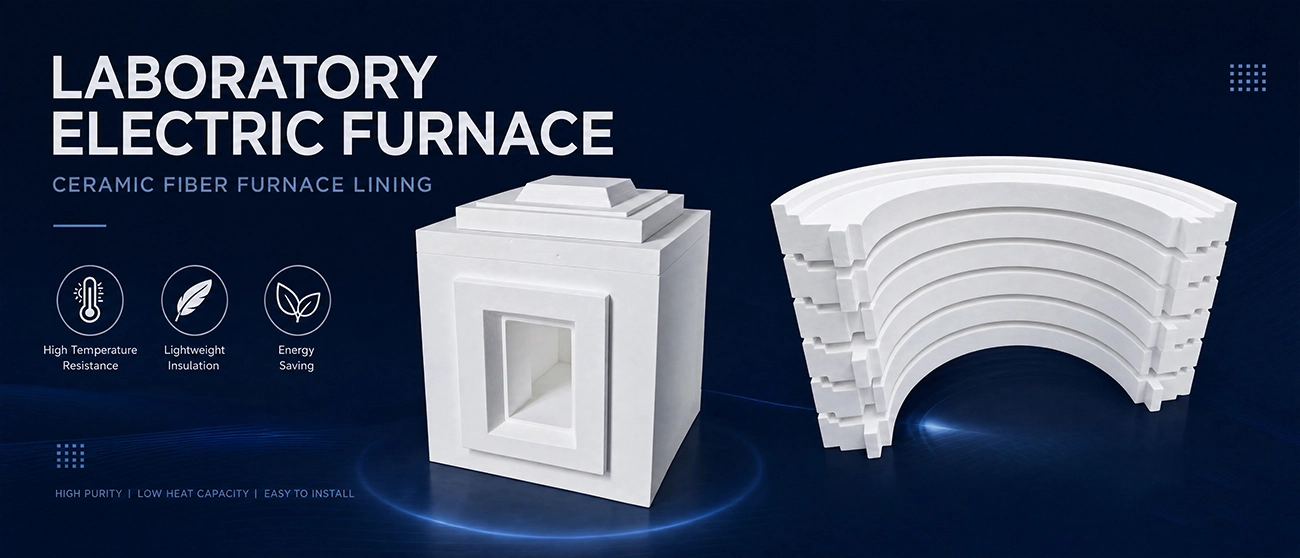
Ceramic fiber insulation is a lightweight, low-thermal-mass refractory material manufactured by spinning or blowing molten alumina-silicate (or higher-purity alumina, zirconia-modified, or polycrystalline fiber blends) into fine fibers, which are then formed into various product shapes for furnace lining applications:
Depending on fiber composition, ceramic fiber products are rated for continuous use temperatures ranging from about 1000°C (standard alumina-silicate fiber) up to 1700°C or higher (high-purity polycrystalline alumina fiber), making them suitable for the vast majority of laboratory furnace applications, including many high-temperature sintering and crystal growth processes.
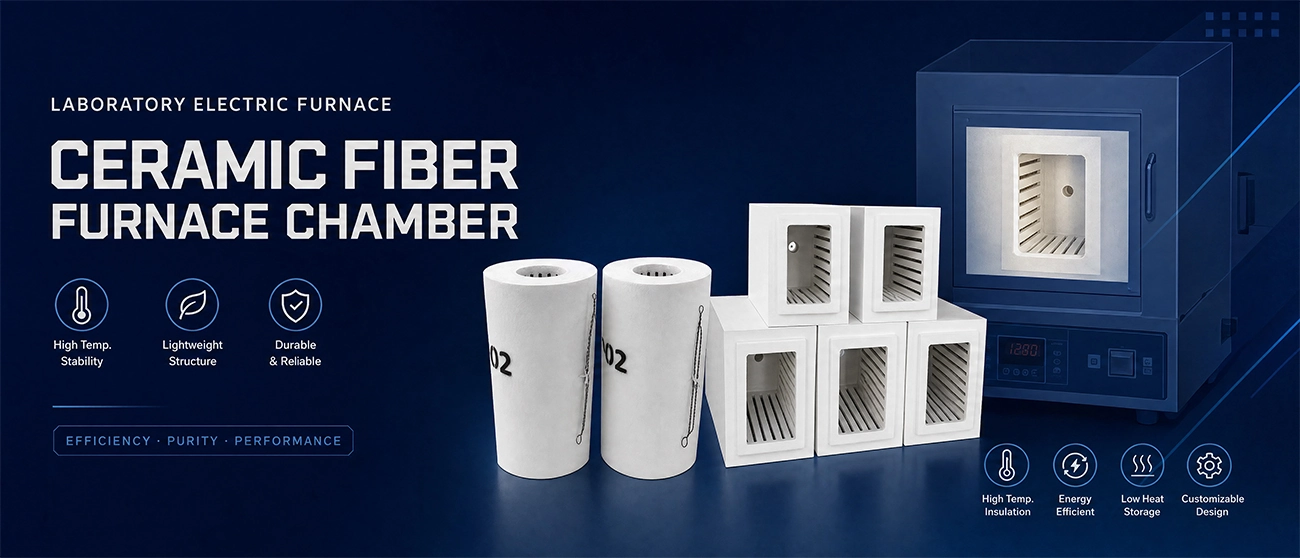
Traditional dense refractory brick and castable concrete linings, while durable and inexpensive in large industrial kilns, are poorly suited to laboratory-scale furnaces for several reasons:
Ceramic fiber’s low density (typically 96-200 kg/m³, versus 2000+ kg/m³ for dense firebrick) and low thermal conductivity give it dramatically lower thermal mass and much better insulating efficiency per unit thickness. This translates directly into the properties laboratory users need most: fast heat-up, fast cool-down, excellent temperature uniformity, and significant energy savings.
Because ceramic fiber has minimal thermal mass compared to brick or castable linings, laboratory furnaces with ceramic fiber chambers can achieve heating rates of several hundred degrees Celsius per hour and cool down to safe handling temperatures far faster than equivalent brick-lined furnaces. This is essential for labs running multiple sample batches per day or performing rapid thermal cycling protocols.
Low thermal conductivity (typically 0.05-0.15 W/m·K at operating temperature, depending on density and grade) means less energy is lost through the furnace walls and less energy is wasted heating the insulation mass itself. For laboratories running furnaces for extended dwell periods or many cycles per week, this translates into meaningful reductions in electricity consumption.
The lightweight, low-mass structure of ceramic fiber allows for more responsive, evenly distributed heating element placement and faster thermal equilibration throughout the chamber, supporting the tight temperature uniformity (often ±1-5°C depending on furnace class) required for reproducible research and calibration work.
Ceramic fiber’s low density allows furnace manufacturers to build lighter, more compact benchtop and floor-standing units without sacrificing insulating performance — important for space-constrained laboratory environments and for furnaces that must be moved or reconfigured.
Unlike dense castable refractories, which are prone to cracking and spalling under rapid temperature swings, ceramic fiber’s flexible fiber matrix accommodates thermal expansion and contraction without structural failure, making it well suited to laboratory protocols involving frequent, fast thermal cycling.
For sensitive analytical and materials science applications, high-purity ceramic fiber formulations (low in fluxes and impurities) minimize contamination risk from the insulation itself — an important consideration in furnaces used for high-purity materials synthesis, semiconductor processing research, or trace-element analysis.
Ceramic fiber insulated chambers are used across a broad range of laboratory heating equipment. Below is a detailed breakdown of the instrument categories where ceramic fiber lining is standard or strongly preferred.
Muffle furnaces are among the most common laboratory heating instruments, used for ashing, loss-on-ignition testing, calcination, and general sample preparation up to typically 1000-1200°C (with high-temperature models reaching 1400-1800°C using specialty fiber and heating elements). Ceramic fiber board or vacuum-formed muffle liners provide the fast heat-up and stable uniform temperature these routine QC and R&D applications demand, while keeping the compact benchtop footprint manageable.
Horizontal and vertical tube furnaces, widely used for materials synthesis, chemical vapor deposition (CVD), annealing, crystal growth, and gas-atmosphere processing, rely on ceramic fiber insulation surrounding the process tube (quartz, alumina, or mullite) to minimize thermal mass around the working zone. This allows precise temperature ramping and control critical for CVD and controlled-atmosphere reactions, and supports the split-hinge or clamshell chamber designs common in split tube furnace models for easy sample loading.
Larger laboratory box furnaces used for heat treatment, sintering, and materials testing at temperatures up to 1400-1700°C typically use ceramic fiber module or board linings to balance insulating performance with the larger internal working volume these units require.
Materials science and ceramics research laboratories rely on sintering furnaces reaching 1600-1800°C (and in some cases higher with specialty polycrystalline fiber and molybdenum disilicide or silicon carbide heating elements) for densifying ceramic, metal powder, and advanced material samples. High-purity, high-temperature-grade ceramic fiber is essential here to withstand sustained peak temperatures without shrinkage or degradation.
Used extensively in food science, environmental testing, and materials analysis for determining ash content, these furnaces require rapid, controlled heating to relatively moderate temperatures (typically 500-1000°C) with excellent recovery time between sample batches — a direct benefit of ceramic fiber’s low thermal mass.
Laboratory-scale annealing furnaces for metallurgical sample preparation and materials testing benefit from ceramic fiber’s fast thermal response, supporting precise control over heating and cooling rate profiles that directly affect microstructural test results.
Sublimation apparatus — used for purifying materials, growing single crystals (such as silicon carbide, aluminum nitride, or various semiconductor crystals via physical vapor transport), and specialty materials research — require exceptionally stable, precisely controlled thermal gradients across the growth chamber. Ceramic fiber insulation surrounding the growth crucible and hot zone allows researchers to establish and fine-tune the sharp axial temperature gradients these processes depend on, while its low mass supports the slow, highly controlled ramp rates (sometimes over many hours or days) that sublimation-based crystal growth protocols require. Multi-zone sublimation furnace designs, with independently controlled heating zones, particularly benefit from ceramic fiber’s ability to thermally isolate adjacent zones with minimal cross-conduction.
Laboratory vacuum furnaces and inert/reducing atmosphere furnaces used for specialty materials processing often incorporate ceramic fiber insulation within the hot zone assembly (in combination with metallic or graphite heat shields in high-vacuum designs) to minimize the thermal mass that must be evacuated or purged between runs, improving cycle time and gas/vacuum system efficiency.
Small-scale laboratory rotary kilns and calciners, used for process development and pilot-scale materials testing, use ceramic fiber lining within the rotating or stationary shell to reduce weight (important for the rotating assembly) while maintaining insulating performance across the kiln length.
Though not always classified strictly as “laboratory” instruments, dental lab and jewelry industry burnout and casting furnaces rely on the same ceramic fiber insulation principles — fast cycling, precise temperature control, and compact chamber design — for wax burnout and investment casting workflows.
While these analytical instruments use small, highly specialized furnace elements, many incorporate micro-scale ceramic fiber or ceramic fiber-derived insulation components around the sample furnace to minimize thermal lag and support the fast, precise temperature programs these analytical techniques require.
Custom vacuum-formed ceramic fiber shapes are molded directly to the furnace chamber geometry — cylindrical for tube furnaces, rectangular box shapes for muffle and box furnaces — providing a seamless, precisely fitted hot-face lining with minimal joints or gaps that could create heat loss paths or uneven temperature zones.
Rigid board is used where a more mechanically durable hot-face surface is needed, such as furnace chamber floors and areas subject to sample loading/unloading contact, or in modular furnace designs assembled from flat panel sections.
For larger laboratory and pilot-scale furnaces, pre-compressed fiber modules anchored to the furnace shell provide fast installation, consistent density, and excellent insulating performance across large wall areas, while allowing for straightforward future relining if needed.
Flexible blanket is often used as a backup insulation layer behind a rigid hot-face lining, or to wrap tube furnace bores and irregular chamber shapes where flexibility is needed to conform to the geometry.
Many laboratory furnaces use a layered insulation system — a higher-density, higher-purity ceramic fiber board or vacuum-formed shape at the hot face (in direct contact with the highest temperatures), backed by lower-density, lower-cost ceramic fiber blanket or board as secondary insulation — optimizing both performance and cost-effectiveness across the temperature gradient through the furnace wall.
Custom vacuum-formed ceramic fiber shapes are molded directly to the furnace chamber geometry — cylindrical for tube furnaces, rectangular box shapes for muffle and box furnaces — providing a seamless, precisely fitted hot-face lining with minimal joints or gaps that could create heat loss paths or uneven temperature zones.
Rigid board is used where a more mechanically durable hot-face surface is needed, such as furnace chamber floors and areas subject to sample loading/unloading contact, or in modular furnace designs assembled from flat panel sections.
For larger laboratory and pilot-scale furnaces, pre-compressed fiber modules anchored to the furnace shell provide fast installation, consistent density, and excellent insulating performance across large wall areas, while allowing for straightforward future relining if needed.
Flexible blanket is often used as a backup insulation layer behind a rigid hot-face lining, or to wrap tube furnace bores and irregular chamber shapes where flexibility is needed to conform to the geometry.
Many laboratory furnaces use a layered insulation system — a higher-density, higher-purity ceramic fiber board or vacuum-formed shape at the hot face (in direct contact with the highest temperatures), backed by lower-density, lower-cost ceramic fiber blanket or board as secondary insulation — optimizing both performance and cost-effectiveness across the temperature gradient through the furnace wall.
Ceramic fiber products are typically graded by classification temperature (the temperature at which the material can be used continuously without significant shrinkage or degradation) — common grades include:
Always select a classification temperature with adequate margin above your furnace’s maximum continuous operating temperature to ensure long service life and dimensional stability.
Higher-density ceramic fiber products generally offer better mechanical durability and slightly improved insulating performance per unit thickness, but at higher cost and weight. Typical laboratory furnace applications use densities in the 128-160 kg/m³ range for board and vacuum-formed shapes, with thermal conductivity values that should be evaluated at the specific mean temperature of use, since conductivity increases with temperature.
Linear shrinkage after prolonged exposure at rated temperature (commonly specified as a percentage after 24 hours at classification temperature) indicates long-term dimensional stability — lower shrinkage values indicate a more durable lining that will maintain consistent insulating thickness and chamber geometry over the furnace’s service life.
For sensitive applications (materials synthesis, semiconductor research, trace analysis), evaluate the fiber’s chemical purity, particularly alkali content (Na2O, K2O) and other flux impurities, which can affect both high-temperature performance and contamination risk to samples processed in the furnace.
Compressive strength and modulus of rupture (for board products) determine how well the lining withstands handling during furnace assembly, sample loading contact, and any mechanical stress from thermal cycling over the furnace’s operating life.
Standard refractory ceramic fiber (RCF) remains widely used, though some laboratories and manufacturers now specify alternative low-bio-persistent (LBP) fiber formulations, which offer comparable thermal performance with different fiber biopersistence characteristics — a consideration increasingly relevant to workplace safety programs and regulatory requirements in some regions.
When specifying a new furnace or upgrading/relining an existing unit, consider the following steps:
Work with a furnace manufacturer or insulation supplier experienced in laboratory-scale applications — laboratory furnace insulation design differs meaningfully from large industrial kiln lining practice, particularly around thermal mass minimization and rapid cycling performance.
Define your maximum operating temperature and typical dwell/cycle profile — this determines the appropriate fiber classification grade and product form.
Identify chamber geometry constraints — tube furnaces, muffle furnaces, and box furnaces each favor different combinations of vacuum-formed shapes, board, and blanket.
Evaluate purity requirements — high-purity or LBP fiber grades for sensitive materials research; standard RCF grades for general-purpose thermal processing.
Confirm compatibility with heating element type — resistance wire, silicon carbide, or molybdenum disilicide elements each have specific mounting and clearance requirements within the ceramic fiber structure.
Plan for maintenance and relining — modular ceramic fiber construction supports easier future relining compared to monolithic castable chambers, an important lifecycle consideration for heavily used laboratory equipment.
 ceramicfiber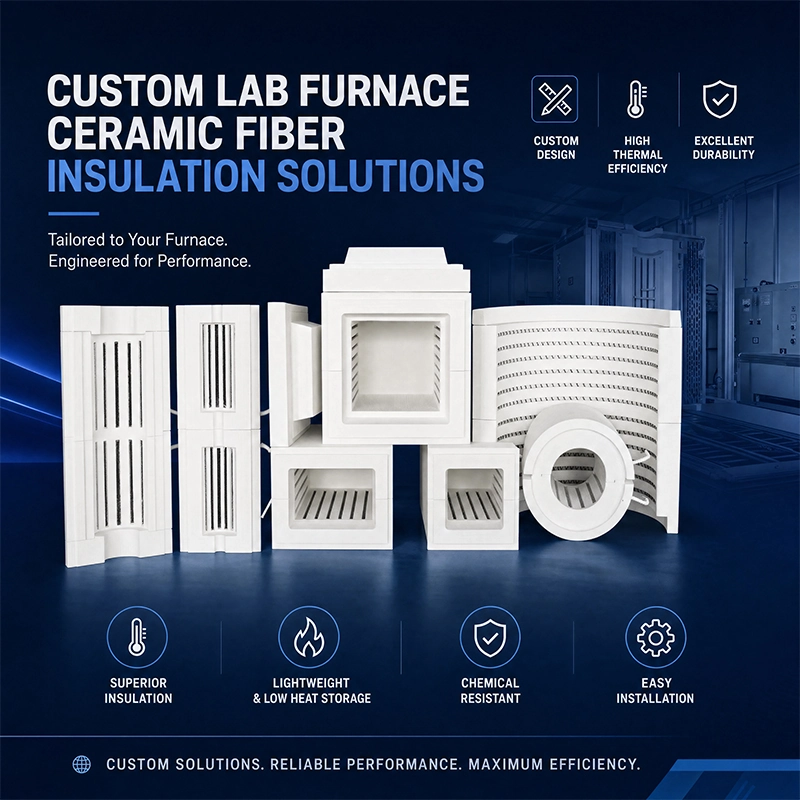

提交产品咨询
我们将会在24小时内联系您