Search the whole station
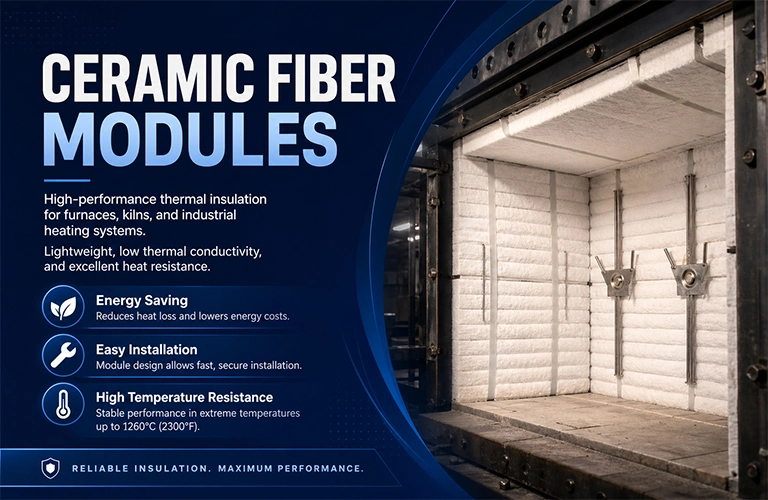
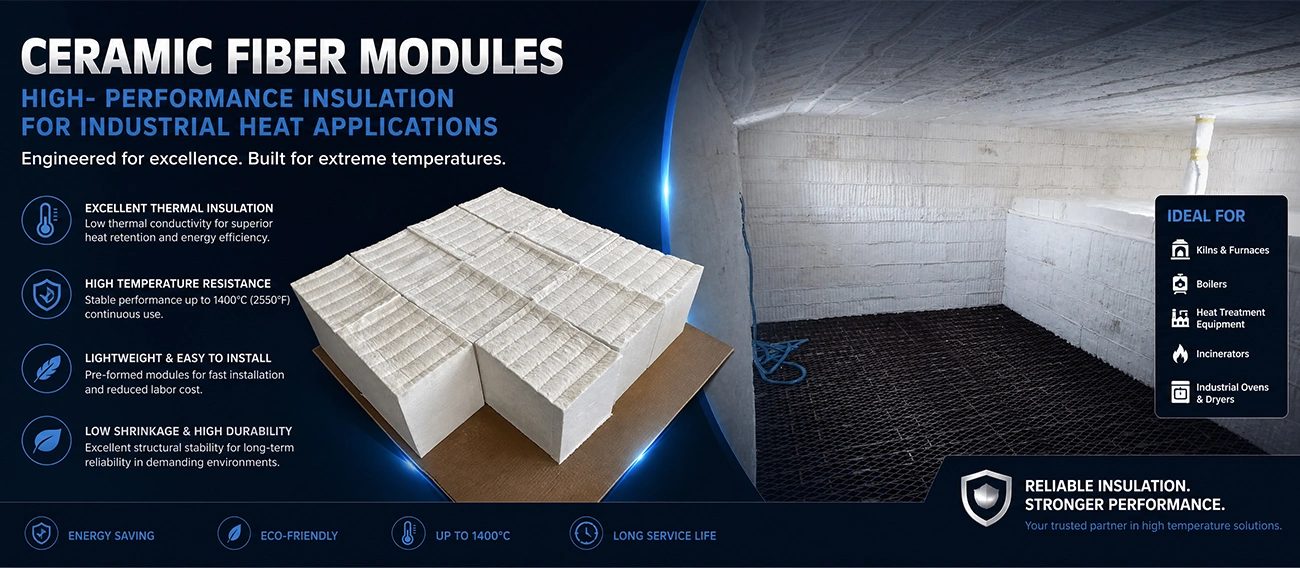
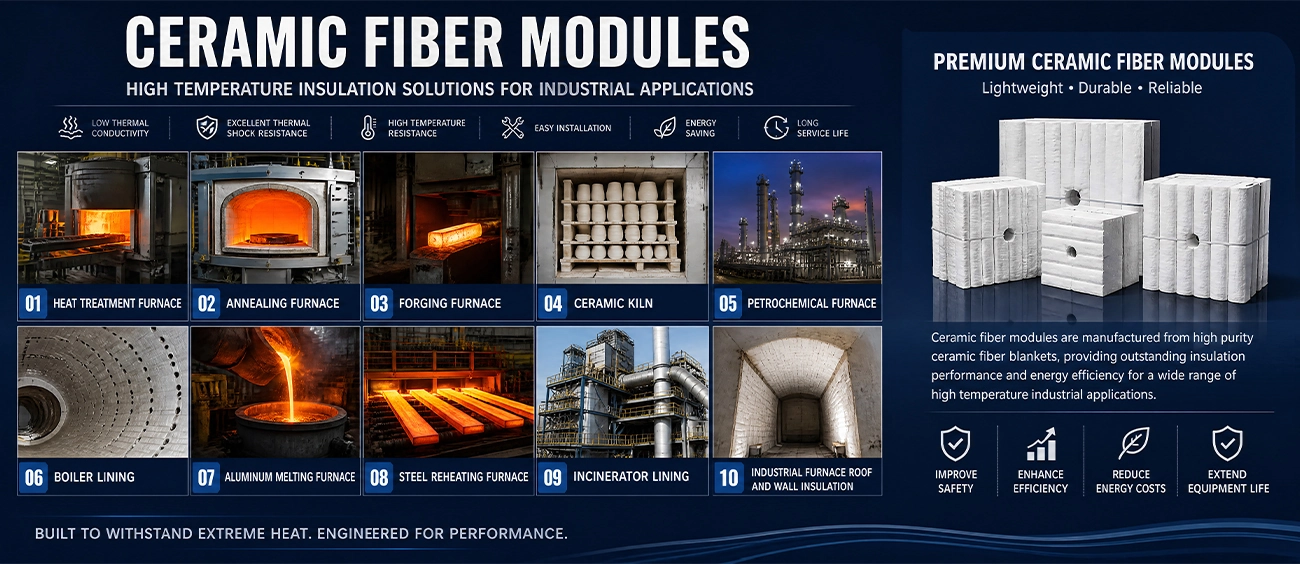
Ceramic fiber modules are high-temperature insulation materials made from folded and compressed ceramic fiber blankets, designed for industrial furnace and kiln lining applications. They help solve common problems such as excessive heat loss, high energy consumption, long heat-up times, heavy refractory linings, and frequent maintenance caused by thermal shock. With low thermal conductivity, lightweight structure, fast installation, and excellent resistance to high temperatures, ceramic fiber modules provide an efficient insulation solution for heat treatment furnaces, reheating furnaces, petrochemical furnaces, boilers, kilns, and other thermal equipment.
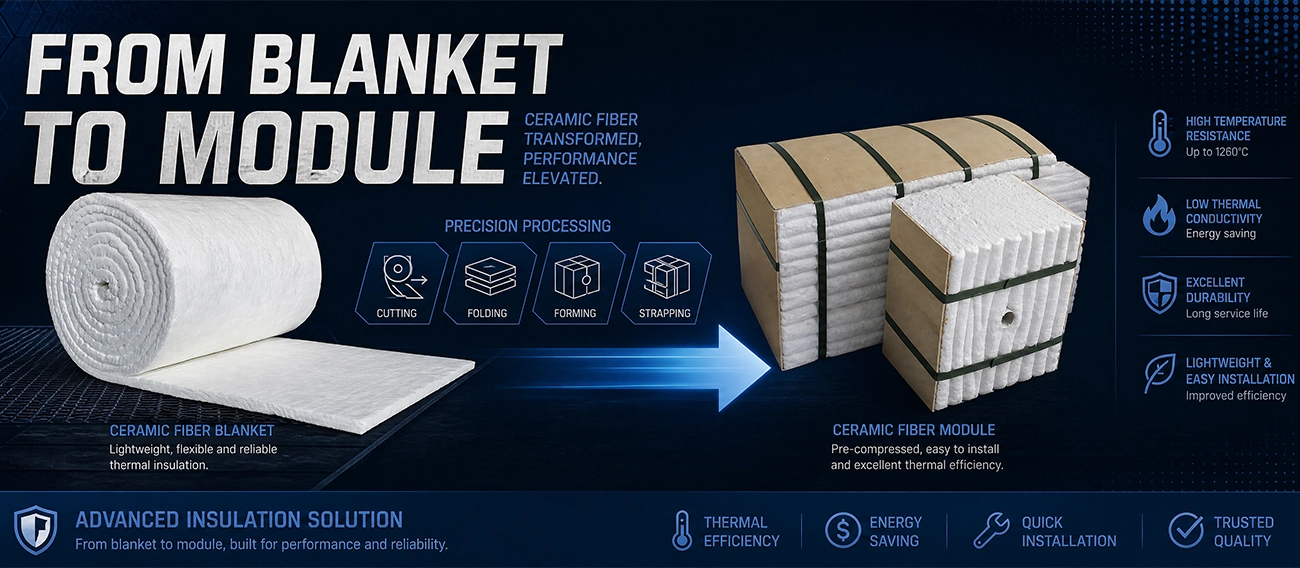
Ceramic fiber modules are typically manufactured from high-quality ceramic fiber blankets through cutting, folding, compression, forming, and anchoring system assembly. First, the appropriate ceramic fiber blanket is selected according to the required temperature grade, density, and application. The blanket is then cut to the specified width and folded into a layered module structure. After that, the folded fiber is compressed and shaped with specialized equipment to achieve stable density, good resilience, and accurate dimensions. Stainless steel anchoring components or fixing systems can be pre-installed according to the furnace lining design. Finally, each module is inspected for size, density, appearance, compression performance, and anchoring quality before packaging. This production process ensures tight installation, reduced heat loss through joints, and reliable insulation performance in high-temperature furnace applications.
Ceramic fiber modules address some of the most persistent problems in high-temperature industrial environments — heat loss, lining failure, and costly downtime.
Traditional refractory brick and castable linings are heavy, slow to install, and prone to cracking under thermal cycling. When a furnace or kiln is shut down and restarted repeatedly, rigid linings expand and contract until joints open up, allowing heat to escape and energy costs to climb. Ceramic fiber modules solve this directly: their folded, accordion-style structure absorbs thermal expansion without cracking, maintaining a stable seal even through frequent temperature cycling.
Weight is another problem traditional linings create. Dense refractory materials add significant structural load to furnace shells, requiring stronger support steel and longer installation time. Ceramic fiber modules weigh a fraction of brick or castable per square meter, reducing both structural demands and labor hours — a full furnace lining that once took weeks can often be completed in days.
Heat retention is the core performance issue most buyers are solving for. With low thermal conductivity across a wide temperature range (depending on grade, modules are rated for continuous use from 800°C up to 1260°C, with zirconia-modified grades reaching higher), modules minimize heat transfer through the furnace shell, lowering fuel or electricity consumption over the equipment’s operating life.
Finally, modules solve a maintenance problem: individual sections can be removed and replaced without disturbing the surrounding lining, unlike monolithic castable repairs that often require partial demolition.
Available in standard, high-purity, and zirconia grades , ceramic fiber modules suit furnaces, kilns, and heat treatment equipment across metallurgical, petrochemical, and ceramics industries.
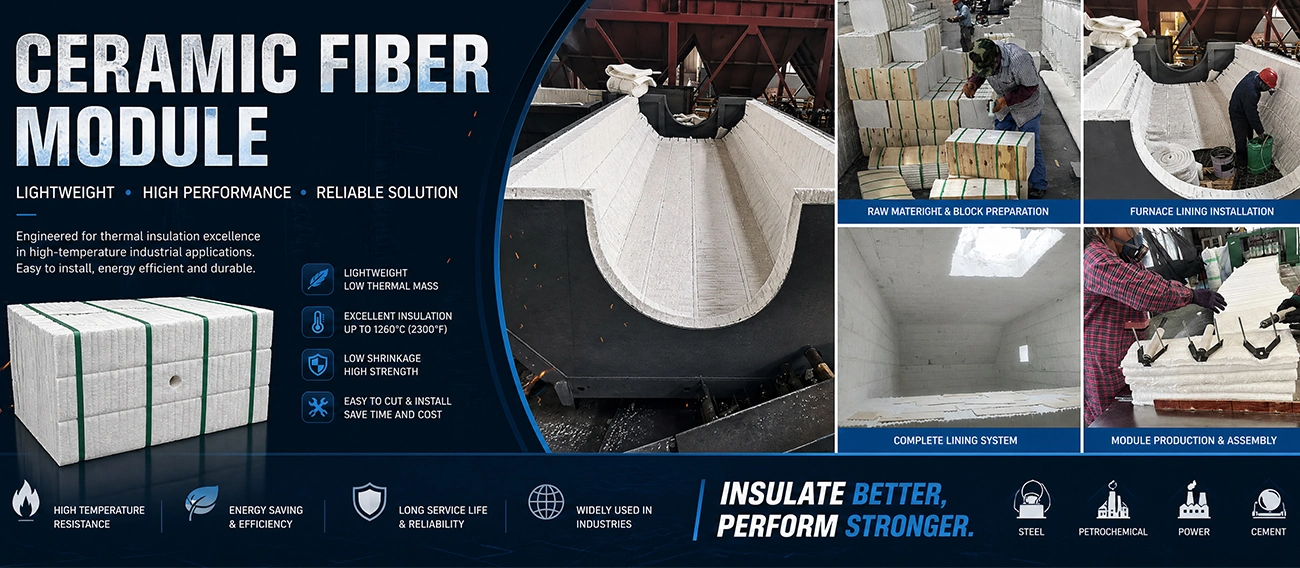
Ceramic fiber modules are widely used as high temperature insulation linings in various industrial furnaces and thermal processing equipment. They are suitable for furnace walls, roofs, doors and other areas that require excellent heat insulation, low heat storage and reliable thermal stability. In the metallurgical industry, ceramic fiber modules can be used in heat treatment furnaces, reheating furnaces, annealing furnaces and forging furnaces to help reduce heat loss and improve energy efficiency. In the ceramic and glass industries, they are commonly applied in kilns, shuttle kilns, tunnel kilns and melting furnaces where stable high temperature performance is required.
Ceramic fiber modules are also used in petrochemical furnaces, cracking units, reformers, boilers, incinerators and waste heat recovery systems. Their lightweight structure helps reduce furnace load, while the compressed module design expands after installation to form a tight and continuous lining. Compared with traditional refractory brick linings, ceramic fiber modules allow faster installation, quicker furnace heating and cooling, and lower fuel consumption. They are especially suitable for applications that require frequent temperature changes or improved thermal shock resistance. With different temperature grades, densities and anchoring systems available, ceramic fiber modules can be customized for new furnace construction, furnace lining repair and energy-saving renovation projects.
| Model | YXN-1260 | YXN-1400 | YXN-1600 |
|---|---|---|---|
| Classification Temperature (°C) | 1260 | 1400 | 1600 |
| Operating Temperature (°C) | 1000 | 1200 | 1500 |
| Color | White | White | White |
| Bulk Density (kg/m³) | 160–210 | 160–210 | 160–210 |
| Permanent Linear Shrinkage (%) | 1100°C × 24h ≤2.0% | 1200°C × 24h ≤1.5% | 1500°C × 24h ≤1.0% |
| Thermal Conductivity (W/m·K) 600°C | 0.12 | 0.13 | 0.08 |
| Thermal Conductivity (W/m·K) 800°C | 0.16 | 0.20 | 0.13 |
| Thermal Conductivity (W/m·K) 1000°C | 0.22 | 0.22 | 0.17 |
| Thermal Conductivity (W/m·K) 1200°C | — | 0.30 | 0.28 |
| Rebound Rate (%) 160 kg/m³ | 5–8% | 5–8% | 5–8% |
| Rebound Rate (%) 192 kg/m³ | 10–15% | 10–15% | 10–15% |
Get Started Free Call?
TEL: +86 1234567
E-mail: info@xxx.com
Detailed disassembly video
A ceramic fiber gasket is used for high-temperature sealing, insulation, gasketing, and thermal protection. Common applications include furnaces, kilns, boilers, ovens, heaters, exhaust systems, and industrial access doors.
Ceramic fiber gaskets are mainly used for thermal insulation and hot gas sealing. They are usually not the best choice for high-pressure liquid sealing unless combined with other materials or designed specifically for that purpose.
Yes. Ceramic fiber gaskets can be cut into custom shapes, sizes, thicknesses, and profiles. Common custom products include flange gaskets, door seals, strips, pads, washers, and insulation frames.
Some are flexible, especially those made from ceramic fiber paper, blanket, cloth, tape, or rope. Ceramic fiber board gaskets are more rigid.
Some ceramic fiber materials contain organic binders to improve handling strength. These binders may burn out during initial heating.
 ceramicfiber
提交产品咨询
我们将会在24小时内联系您