Search the whole station
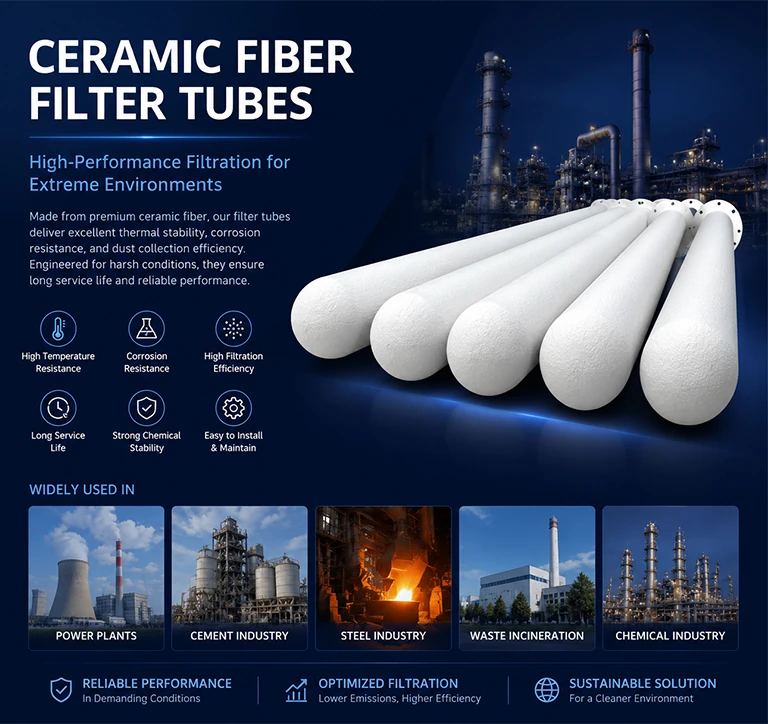
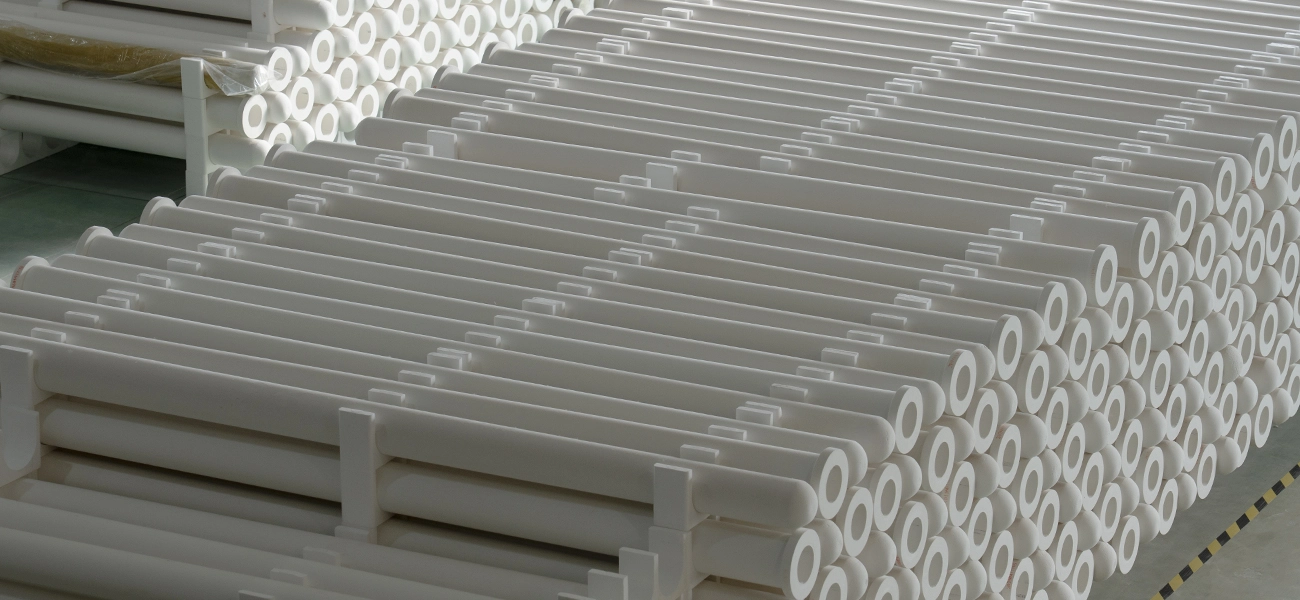
Ceramic fiber filter tubes are high-temperature, rigid porous ceramic filtration elements engineered for dust removal and gas-solid separation in demanding industrial environments. Manufactured from high-purity ceramic fibers combined with inorganic binders, these filter tubes combine excellent mechanical strength with outstanding thermal stability, making them ideal for applications where conventional bag filters or metallic filters cannot withstand the operating conditions.
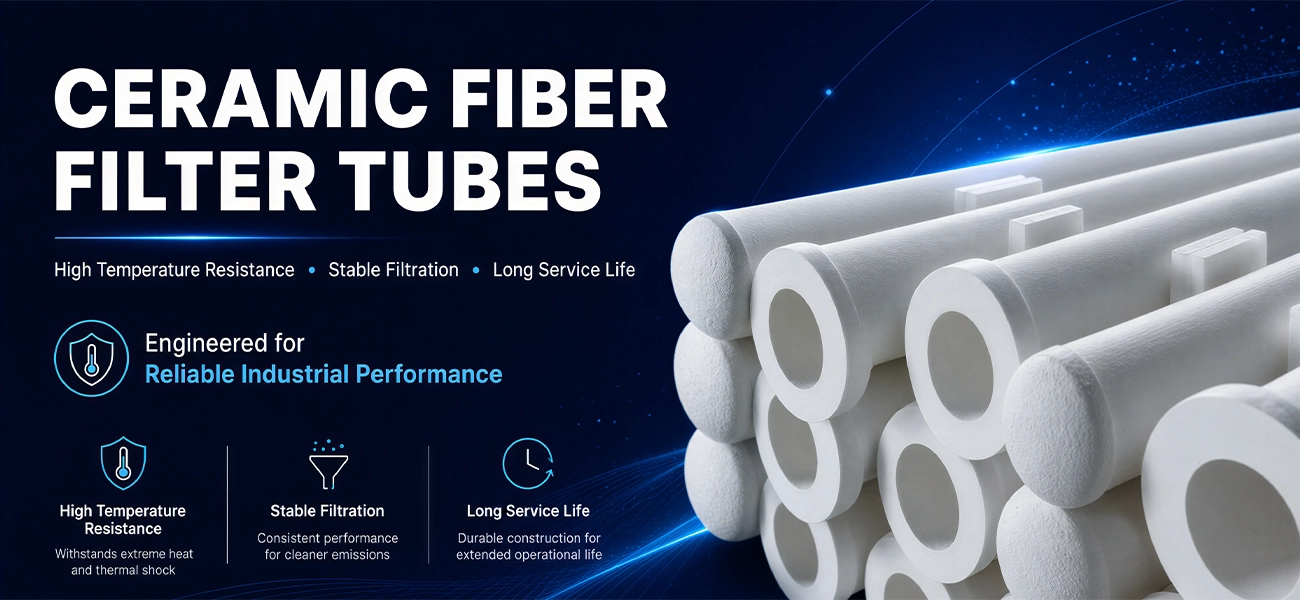

The production of ceramic fiber filter tubes is a controlled manufacturing process that combines raw material testing, trial production, patented fiber processing, precision forming, drying, grinding, curing, and full-process quality inspection. Each production batch is tracked to ensure stable quality, reliable filtration performance, and traceable inspection records.
Before mass production, all raw materials are inspected and tested. Key quality parameters include chemical composition, fiber diameter, fiber length, shot content, Becke value, and other technical indicators.
Based on the test results, trial production is carried out to verify the material performance and confirm suitable production parameters. This step helps ensure that the raw materials meet the requirements for high-temperature filtration and stable tube forming.
The ceramic fiber bulk is processed using patented fiber bulk treatment technology. During this stage, the fiber is opened, refined, and adjusted to obtain better dispersion and forming performance.
Quality parameters are tested during and after processing to ensure the consistency of the fiber bulk. Stable fiber quality is essential for uniform wall thickness, proper porosity, mechanical strength, and filtration efficiency.
The forming process adopts centrifugal distribution of ceramic fiber slurry. The fiber slurry is evenly distributed and then filtered through an outer mold by suction filtration.
During this process, more than 100 layers of fiber paper are gradually stacked to form the tube structure. This multi-layer forming method helps improve the uniformity, strength, air permeability, and filtration stability of the ceramic fiber filter tube.
The forming parameters are strictly controlled according to the confirmed production process, including slurry concentration, distribution speed, suction filtration time, wall thickness, and tube dimensions.
After forming, the ceramic fiber filter tubes are transferred into an oven for drying. The drying process removes moisture from the formed tube and fixes the basic shape of the product.
Controlled drying is important to prevent cracking, deformation, or uneven shrinkage. The drying temperature and time are adjusted according to the tube size, wall thickness, and material condition.
After drying, the filter tube enters the grinding and curing stage. The flange is ground by machine to meet the required standard size and installation specification.
After grinding, the filter tube is immersed in a hardening agent and then sent into the oven for further baking. This process improves the structural strength of the ceramic fiber filter tube and makes the product more durable during installation and operation.
Quality inspection is carried out throughout the entire production process. At every stage, the quality control department checks the relevant product parameters to ensure that each step meets production standards.
This stage-by-stage inspection system helps identify and correct potential issues early, ensuring stable production quality and reducing batch variation.
After production is completed, each batch of ceramic fiber filter tubes undergoes final inspection. The main inspection items include:
Only products that meet the required quality standards are approved for packaging and delivery.
After final inspection, a quality inspection report is issued for each batch of ceramic fiber filter tubes. The strict full-process quality control system not only guarantees product quality, but also creates a unique, tamper-proof, and traceable quality record.
This traceability system allows each batch of products to be tracked from raw material inspection to final delivery, providing reliable quality assurance for industrial high-temperature dust filtration applications.
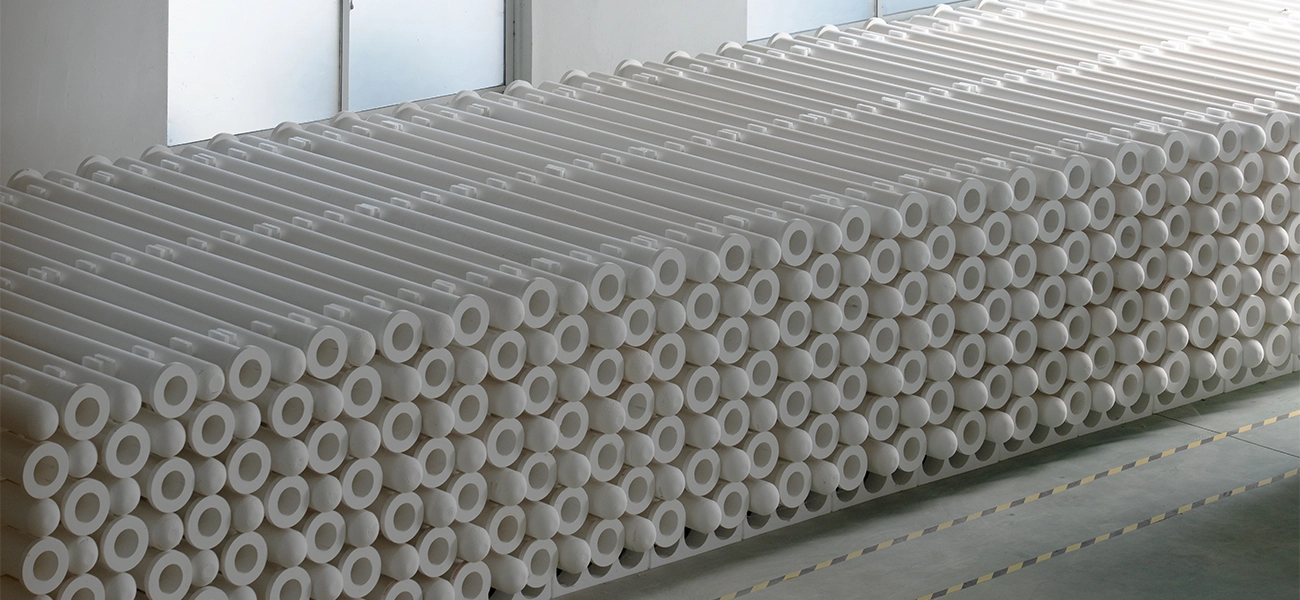
Ceramic fiber filter tubes are advanced high-temperature filtration components widely used in industries such as metallurgy, waste incineration, chemical processing, and power generation. They are designed to remove dust and harmful gases from flue gas efficiently, even under extreme operating conditions.
The working principle of ceramic fiber filter tubes can be understood through three main mechanisms: surface filtration, depth filtration, and catalytic reaction (optional).
When dust-laden flue gas passes through the ceramic fiber filter tube, the larger particles are first captured on the surface of the filter.
This dust cake becomes the primary filtering layer, significantly improving filtration efficiency.
👉 Key advantage:
Once the dust cake is formed, filtration efficiency can reach over 99.9%, even for fine particles.
Ceramic fiber filter tubes have a unique porous structure composed of interwoven ceramic fibers. This structure allows for deep filtration:
👉 Compared to traditional bag filters:
As dust accumulates, the pressure drop across the filter increases. To maintain efficiency, periodic cleaning is required.
👉 Benefits:
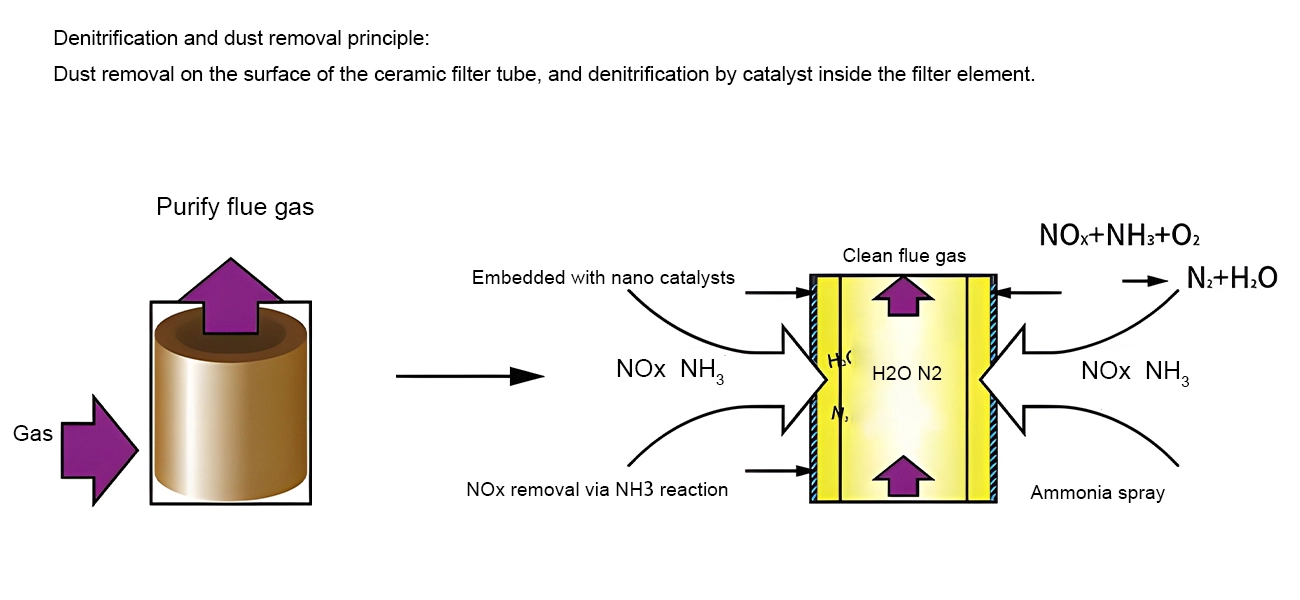
Some ceramic fiber filter tubes are coated with catalysts, enabling simultaneous gas treatment.
At temperatures between 250–400°C:
👉 This allows a multi-functional system:
Dust removal + DeNOx + Desulfurization in one unit
The ceramic filter tube can withstand relatively high operating temperatures. Its normal working temperature is 250-400°C, and the short-term operating temperature can reach up to 450°C. With an asymmetric gradient pore structure, the porosity of the filter tube can reach up to 80%. It is chemically inert to almost all chemicals except HF gas. However, HF can be removed by an acid-removal process before use, and it will not affect the filter tube if condensation is prevented.
An inorganic membrane is used as the gas-solid separation layer. The particle filtration size can be controlled by the pore size of the membrane, enabling dust emission concentration to reach less than 1 mg/Nm³.
The surface has high hardness and excellent wear resistance. The material has a bending strength of up to 1 MPa, along with good acid and alkali resistance and oxidation resistance.
Denitration catalysts can be embedded into the inner wall of the ceramic tube, enabling simultaneous treatment of dust and NOx in exhaust gas. This integrated design reduces the footprint of on-site equipment and further lowers the overall cost of waste gas treatment.

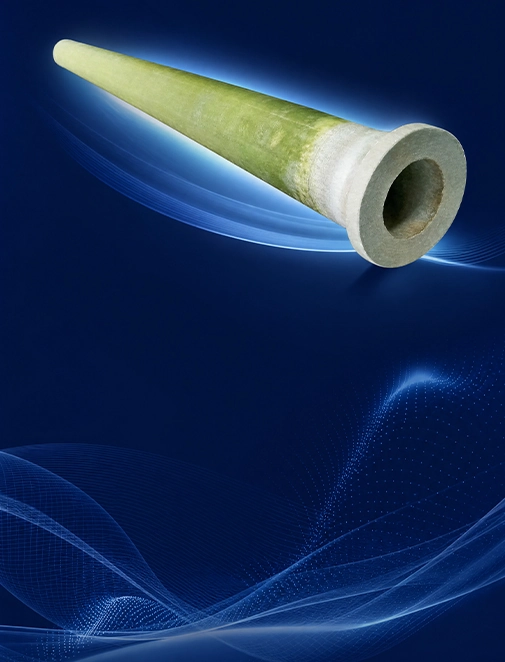
| Filter tube outer diameter (A1) | mm | 150 | |
| Filter tube outer diameter (A2) | mm | 135 | |
| Filter tube inner diameter (B) | mm | 110 | |
| Flange surface outer diameter(C ) | mm | 195 | |
| Flange face height/thickness(D) | mm | 30 | |
| Total length of filter tube(E) | mm | 3000 | 4000 |
| Filter tube filtration area | m2 | 1.4 | 1.7 |
Get Started Free Call?
TEL: +86 1234567
E-mail: info@xxx.com
Detailed disassembly video
Ceramic fiber filter tubes are high-temperature, rigid filtration elements designed to remove fine particulate matter and dust from industrial gas streams — commonly used in power plants, cement kilns, metal smelting, waste incineration, and other high-temperature dust-laden environments where conventional bag filters can’t survive.
Unlike fabric bags that degrade or fail at high temperatures, our ceramic fiber tubes withstand continuous operation up to 400°C (with peak resistance even higher), offer longer service life, and maintain stable filtration performance under harsh chemical and thermal conditions where fabric simply can’t survive.
Not with us. We offer sample units for on-site testing before you commit to a full order, so you can verify real-world performance in your own system before scaling up.
They can effectively remove fine dust, fly ash, metal particles, cement dust, mineral powder, and other solid particles from industrial exhaust gases.
Yes. Dimensions, wall thickness, mounting design, fiber composition, surface treatment, and filtration rating can be customized according to the dust collector and process requirements.
 ceramicfiber
提交产品咨询
我们将会在24小时内联系您