Search the whole station
Ceramic fiber paper is a lightweight, flexible, high-temperature insulation material used in industrial furnaces, kilns, boilers, gaskets, seals, fire protection systems, and many other thermal applications. Made from ceramic fibers and a small amount of organic binder, it combines excellent heat resistance with easy handling, cutting, wrapping, and installation.
For manufacturers, engineers, maintenance teams, and purchasing managers, ceramic fiber paper offers a practical solution where conventional insulation materials are too thick, too rigid, or unable to withstand extreme temperatures. Its thin profile, low thermal conductivity, and strong thermal shock resistance make it especially valuable in applications that require reliable insulation in limited spaces.
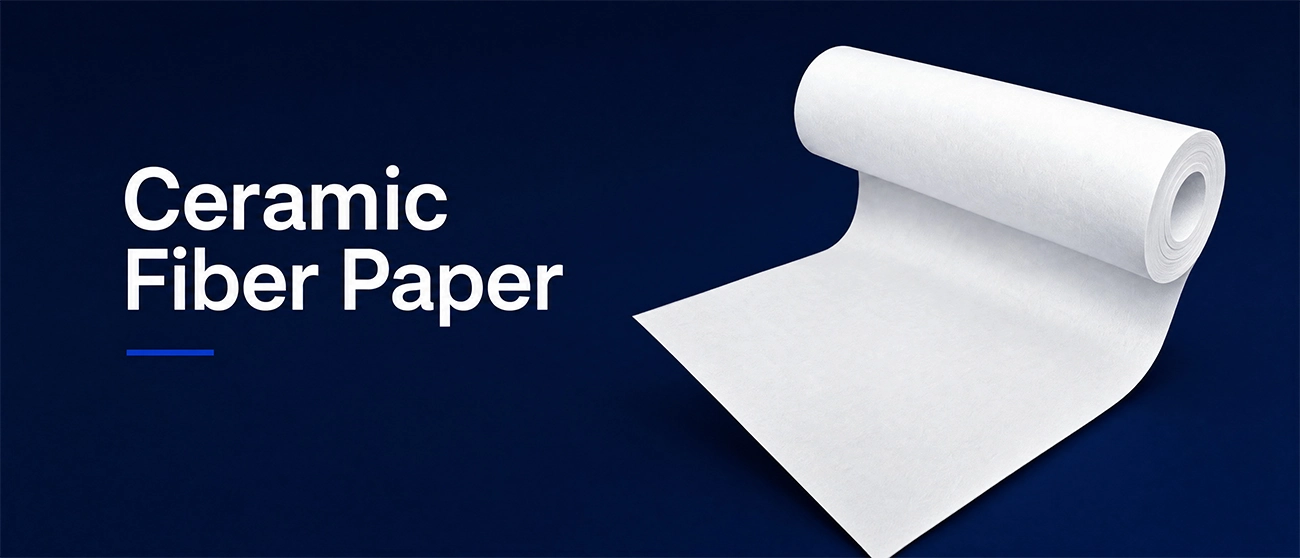
Ceramic fiber paper is a refractory insulation product made from high-purity ceramic fibers. These fibers are typically composed of alumina and silica, giving the material strong resistance to high temperatures. During production, the fibers are processed into a uniform sheet using a wet-forming method. A small amount of organic binder is added to improve flexibility, strength, and handling before installation.
The result is a thin, smooth, lightweight insulation paper that can be cut with ordinary tools and shaped around complex surfaces. Unlike ceramic fiber blanket, board, or module products, ceramic fiber paper is designed for applications where a thinner and more flexible insulation layer is required.
Ceramic fiber paper is available in different thicknesses, densities, widths, temperature grades, and chemical compositions. Standard options are commonly used in temperature ranges from approximately 1000°C to 1260°C, while higher-grade products may be designed for more demanding thermal environments.
Ceramic fiber paper is widely used because it delivers a strong combination of thermal, mechanical, and installation advantages. Its most important properties include high temperature resistance, low thermal conductivity, low heat storage, chemical stability, flexibility, and good dielectric strength.
One of the main benefits is its ability to reduce heat loss. The fine ceramic fiber structure traps air within the material, slowing heat transfer and improving energy efficiency. This makes ceramic fiber paper suitable for equipment that needs consistent temperature control.
Another important property is thermal shock resistance. Ceramic fiber paper can tolerate rapid temperature changes without cracking like many rigid refractory materials. This helps improve service life in applications where heating and cooling cycles are frequent.
Ceramic fiber paper is also lightweight. Compared with dense refractory bricks or castables, it adds very little weight to equipment. This is useful in aerospace, automotive, appliance, and industrial systems where weight reduction is valuable.
Its flexibility is another major advantage. It can be wrapped around pipes, layered between metal parts, used as a gasket, or installed as a lining in tight spaces. Because it is easy to cut and shape, it reduces installation time and labor cost.
The production of ceramic fiber paper begins with ceramic fiber bulk. The fibers are dispersed in water to form a slurry. Binders and additives may be added depending on the required strength, flexibility, surface finish, and application.
The slurry is then formed into a continuous sheet using a paper-making process. Excess water is removed, and the sheet is dried under controlled conditions. The finished paper is rolled, cut, inspected, and packaged.
The organic binder gives the paper enough strength for handling, cutting, and installation. When the material is first exposed to high temperatures, the binder burns out. This may create light smoke or odor during initial heating, so proper ventilation is recommended during first use.
High-quality ceramic fiber paper should have uniform thickness, consistent density, smooth surfaces, and minimal unfiberized particles. These details matter because uneven material can affect sealing, insulation performance, and installation quality.
Ceramic fiber paper is used in many industries because it solves insulation and sealing problems in high-temperature environments. Common applications include furnace insulation, expansion joints, gaskets, heat shields, fire doors, kilns, boilers, glass manufacturing, foundries, automotive systems, and appliance insulation.
In furnaces and kilns, ceramic fiber paper is often used as a backup insulation layer or separation layer. It can help reduce heat loss, protect surrounding structures, and improve temperature stability.
In gasket and sealing applications, ceramic fiber paper is valued for its compressibility and heat resistance. It can be cut into custom shapes and used between metal flanges, access doors, burner blocks, and high-temperature equipment components.
In metal processing and foundry operations, ceramic fiber paper can be used as a parting layer, mold wrap, or insulation barrier. Its low heat storage helps improve process efficiency and reduces the risk of thermal damage to nearby components.
In automotive and transportation applications, ceramic fiber paper may be used for exhaust insulation, catalytic converter insulation, heat shields, and battery thermal protection systems. Its lightweight structure and high temperature resistance make it suitable for compact thermal management designs.
In household and commercial appliances, ceramic fiber paper can be found in ovens, heaters, boilers, fireplaces, and other equipment that requires thin thermal insulation.
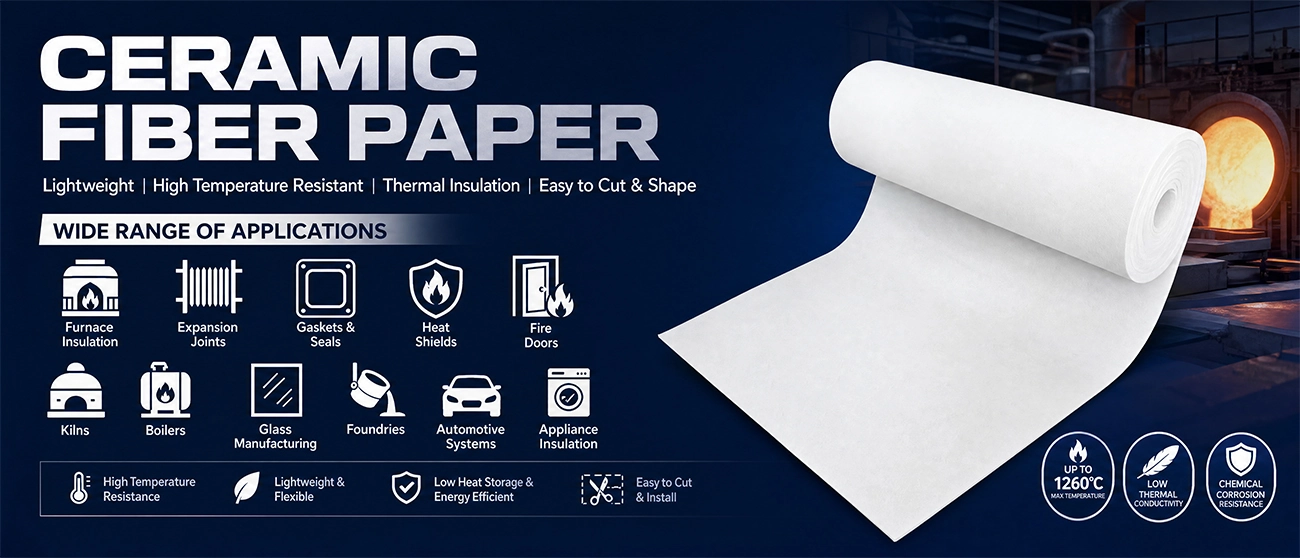
Ceramic fiber paper offers several practical advantages over traditional insulation materials. The first is space efficiency. Because it is available in thin sheets, it can provide thermal protection where thicker insulation would not fit.
The second advantage is ease of fabrication. Ceramic fiber paper can be cut using knives, scissors, dies, or CNC cutting equipment. This makes it suitable for custom gaskets, pads, strips, and insulation shapes.
The third advantage is energy efficiency. By reducing heat loss, ceramic fiber paper can help equipment reach operating temperature faster and maintain heat more effectively. In industrial settings, this may contribute to lower fuel or electricity consumption.
The fourth advantage is excellent resistance to thermal cycling. In many applications, equipment is repeatedly heated and cooled. Ceramic fiber paper performs well under these conditions because it is less likely to crack or spall compared with rigid refractory materials.
The fifth advantage is versatility. A single material can be used for insulation, sealing, separation, filtration support, fire protection, and electrical insulation in suitable applications.
Ceramic fiber paper and ceramic fiber blanket are both made from ceramic fibers, but they are designed for different uses. Ceramic fiber blanket is thicker, softer, and commonly used for furnace linings, kiln insulation, pipe wrapping, and large-area thermal insulation. Ceramic fiber paper is thinner, denser, smoother, and better suited for gaskets, seals, expansion joints, and precision insulation layers.
If the application requires covering a large surface with thicker insulation, ceramic fiber blanket may be the better choice. If the application requires a thin, flexible, die-cut, or smooth insulation material, ceramic fiber paper is usually more appropriate.
Many systems use both materials together. For example, ceramic fiber blanket may serve as the main insulation layer, while ceramic fiber paper may be used as a sealing strip, surface layer, or separation layer.
Ceramic fiber board is a rigid insulation product with higher structural strength. It is used where a self-supporting insulation panel is needed. Ceramic fiber paper, by contrast, is flexible and thin. It does not provide the same rigidity, but it is much easier to bend, wrap, and cut into complex shapes.
Choose ceramic fiber board when the application requires a rigid panel, furnace wall lining, baffle, or structural insulation surface. Choose ceramic fiber paper when the application requires flexibility, thinness, gasketing, or wrapping.
Ceramic fiber paper is available in different temperature grades. Standard alumina-silica ceramic fiber paper is commonly rated for high-temperature applications around 1260°C. Higher-grade products may use zirconia-containing fibers or other compositions to improve performance at elevated temperatures.
When selecting a temperature grade, it is important to consider continuous working temperature, peak temperature, atmosphere, mechanical load, and exposure time. The maximum classification temperature does not always mean the material should be used continuously at that temperature. Continuous use conditions are often lower than the classification rating.
For demanding applications, buyers should request technical data sheets from the supplier. Important data includes classification temperature, chemical composition, density, thickness tolerance, tensile strength, linear shrinkage, thermal conductivity, and loss on ignition.
Ceramic fiber paper is commonly available in thicknesses such as 1 mm, 2 mm, 3 mm, 5 mm, and 6 mm, though exact options vary by manufacturer. Thin paper is useful for gaskets, seals, and precision insulation. Thicker paper provides better insulation and cushioning.
Density affects strength, flexibility, compressibility, and insulation performance. Higher-density paper may offer better mechanical strength and smoother cutting, while lower-density paper may be softer and more compressible.
Roll width and length also matter. For large-scale production, buyers may prefer standard rolls that fit automated cutting equipment. For maintenance and repair, smaller rolls or sheets may be easier to store and handle.
Ceramic fiber paper is used across a wide range of industries. In the steel and metal industry, it supports furnace insulation, ladle preheating, casting systems, and thermal barriers. In the glass industry, it is used around furnaces, molds, and high-temperature processing equipment.
In the petrochemical industry, ceramic fiber paper may be used in heaters, boilers, reformers, and sealing systems. In power generation, it can help insulate turbines, boilers, and exhaust systems.
In the automotive industry, ceramic fiber paper supports exhaust insulation, thermal shields, and high-temperature gaskets. In aerospace, its lightweight thermal insulation properties can be useful in specialized systems.
In electronics and electrical equipment, ceramic fiber paper may be used where both heat resistance and electrical insulation are required, depending on design specifications.
Many buyers purchase ceramic fiber paper in rolls or sheets, but custom die-cut parts are also common. Manufacturers can cut ceramic fiber paper into gaskets, washers, strips, rings, pads, and complex profiles.
Custom die-cut ceramic fiber paper parts are useful for OEM production because they save installation time and improve consistency. Instead of cutting material manually on-site, workers can install ready-made parts that match the exact equipment design.
When ordering custom parts, provide accurate drawings, thickness requirements, tolerance expectations, temperature conditions, and quantity estimates. For complex applications, sample testing is recommended before large-volume production.
| Property | High Aluminium (1260°C) | High Aluminium (1300°C) | Zirconium (1450°C) |
| Classification Temperature (°C) | 1260 | 1300 | 1450 |
| Working Temperature (°C) | ≤1000 | ≤1150 | ≤1350 |
| Color | Pure White | Pure White | Pure White |
| Density (kg/m³) | 170-220 | 170-220 | 170-220 |
| Thermal Conductivity @400°C (W/m·K) | 0.07 | 0.069 | 0.068 |
| Thermal Conductivity @600°C (W/m·K) | 0.09 | 0.088 | 0.087 |
| Thermal Conductivity @800°C (W/m·K) | 0.12 | 0.11 | 0.1 |
| Tensile Strength (MPa) | 0.35-0.75 | 0.35-0.75 | 0.35-0.75 |
| Al2O3 (%) | 42-43 | 51-53 | 39-40 |
| SiO2 (%) | 53 | 44 | 44 |
| ZrO2 (%) | 15-17 | ||
| Fe2O3 + TiO2(%) | ≤1.2 | ≤0.3 | ≤0.2 |
| Na2O + K2O (%) | ≤0.5 | ≤0.3 | ≤0.2 |
| CaO + MgO (%) | 0.3 | ≤0.3 | ≤0.2 |
Get Started Free Call?
TEL: +86 1234567
E-mail: info@xxx.com
Detailed disassembly video
A ceramic fiber gasket is used for high-temperature sealing, insulation, gasketing, and thermal protection. Common applications include furnaces, kilns, boilers, ovens, heaters, exhaust systems, and industrial access doors.
Ceramic fiber gaskets are mainly used for thermal insulation and hot gas sealing. They are usually not the best choice for high-pressure liquid sealing unless combined with other materials or designed specifically for that purpose.
Yes. Ceramic fiber gaskets can be cut into custom shapes, sizes, thicknesses, and profiles. Common custom products include flange gaskets, door seals, strips, pads, washers, and insulation frames.
Some are flexible, especially those made from ceramic fiber paper, blanket, cloth, tape, or rope. Ceramic fiber board gaskets are more rigid.
Some ceramic fiber materials contain organic binders to improve handling strength. These binders may burn out during initial heating.
 ceramicfiber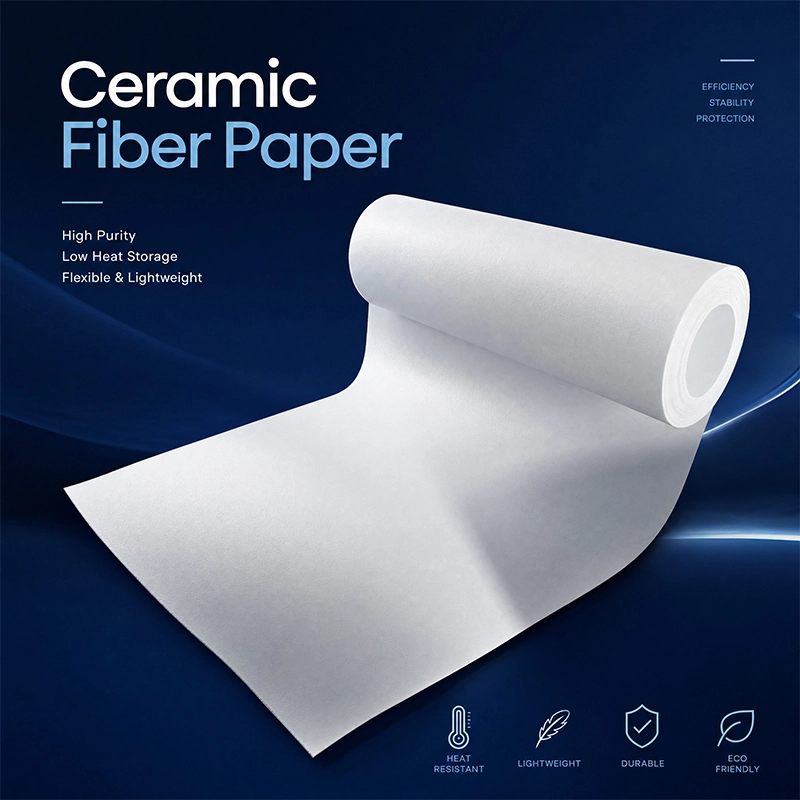

提交产品咨询
我们将会在24小时内联系您